


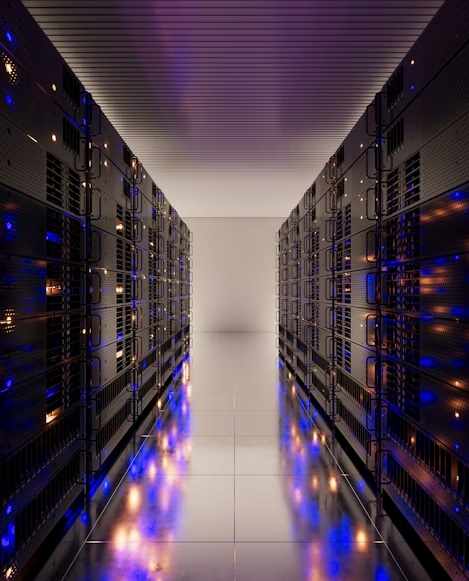
Sustainability has become a defining factor in how modern data centres are designed, upgraded, and operated. Rising energy costs, regulatory pressure, and environmental accountability are forcing organisations to rethink how infrastructure supports both performance and long-term efficiency.
Green infrastructure is no longer a future concept. It is shaping decisions around refurbishment, new builds, power strategy, cooling design, and operational management. This article explores how sustainability is influencing data centre development and what practical steps organisations are taking to reduce environmental impact without compromising resilience or capacity. performance for their specific environment.
Why Sustainability Matters in Modern Data Centres
Data centres are among the most energy-intensive facilities in the built environment. As digital demand increases, sustainability has shifted from a secondary consideration to a core design requirement.
Key drivers include:
- Escalating energy and operational costs.
- Carbon reporting and compliance requirements.
- Corporate ESG commitments.
- Pressure from clients and stakeholders.
- Grid capacity limitations.
- Sustainable design now directly affects operating margins, regulatory compliance, and long-term viability.
What Green Infrastructure Means for Data Centres
Green infrastructure refers to systems and design strategies that reduce energy consumption, minimise waste, and improve overall efficiency throughout a data centre’s lifecycle. This includes:
- Energy-efficient power and cooling systems.
- Smarter building management and monitoring.
- Reduced reliance on fossil fuels.
- Optimised layouts that improve airflow and maintenance access.
- Rather than focusing on a single technology, sustainability is achieved through integrated planning across all infrastructure layers.
Energy Efficiency as the Foundation
Reducing Power Usage Effectiveness (PUE)
Lowering PUE remains one of the most effective ways to improve sustainability. This is typically achieved through:
- High-efficiency UPS systems.
- Intelligent power distribution.
- Real-time monitoring and load balancing.
- Reducing energy loss across infrastructure.
- Facilities that monitor and actively manage power performance can make meaningful reductions without major structural changes.
Cooling Strategies That Reduce Environmental Impact
Cooling remains one of the largest contributors to data centre energy use. Sustainable approaches include:
- Hot aisle and cold aisle containment.
- Free cooling using external air where conditions allow.
- Liquid cooling for high-density workloads.
- Rear-door heat exchangers.
- AI-assisted cooling optimisation.
These systems are increasingly introduced through targeted upgrades, particularly during data centre refurbishment projects where existing cooling infrastructure no longer meets efficiency standards.
The Role of Refurbishment in Sustainable Data Centres
Refurbishment plays a central role in improving sustainability without the environmental cost of new construction. Upgrading existing facilities can:
- Extend asset lifespan.
- Reduce embodied carbon.
- Improve energy performance.
- Minimise operational disruption.
- Avoid unnecessary demolition and rebuilds.
A structured data centre refurbishment approach allows organisations to replace inefficient systems, improve airflow, and integrate modern monitoring while retaining usable infrastructure.
In many cases, refurbishment delivers faster sustainability gains than new builds, particularly where power and cooling systems are the primary constraints.
Designing Sustainability into New Data Centre Builds
While refurbishment offers significant benefits, new facilities allow sustainability to be embedded from the outset.
Through integrated data centre design and build, organisations can:
- Optimise site orientation and layout.
- Design for future density without oversizing.
- Integrate renewable-ready power systems.
- Plan efficient cooling from day one.
- Reduce long-term operational emissions.
The advantage lies in designing for adaptability, ensuring infrastructure remains efficient as technology and demand evolve.
Renewable Energy and Grid Interaction
Sustainable data centres increasingly focus on how they interact with the wider energy network. This includes:
- Renewable energy procurement.
- On-site generation where feasible.
- Battery storage and demand response.
- Smarter grid engagement to reduce peak load impact.
While full energy independence is rare, reducing reliance on carbon-intensive power sources improves both sustainability and cost stability.
Smart Systems and Operational Intelligence
Monitoring, Automation, and Data-Driven Decisions
Sustainability depends on visibility. Modern facilities rely on:
- DCIM platforms.
- Real-time environmental monitoring.
- Predictive maintenance tools.
- Automated reporting.
These systems identify inefficiencies early, allowing operators to adjust performance before issues escalate.
AI and Predictive Efficiency
AI is increasingly used to:
- Optimise cooling setpoints.
- Predict equipment failure.
- Balance workloads more efficiently.
- Reduce unnecessary energy use.
These tools improve sustainability without requiring constant manual intervention.
Space Planning and Material Efficiency
Efficient use of space reduces both operational and environmental cost. Key considerations include:
- Optimised rack layouts.
- Improved airflow paths.
- Reduced cabling congestion.
- Flexible layouts that adapt to future change.
Refurbishment projects often focus on reorganising space to achieve better efficiency without expanding the building footprint.
Final Thoughts
Sustainability is reshaping how data centres are designed, upgraded, and operated. Green infrastructure is no longer limited to new builds, it is increasingly delivered through strategic refurbishment, smarter energy use, and integrated monitoring.
Facilities that prioritise efficiency, adaptability, and long-term performance are better positioned to meet regulatory demands, control costs, and support future growth without unnecessary environmental impact.
FAQs
Can existing data centres realistically meet modern sustainability targets?
Yes. Through targeted upgrades to cooling, power distribution, and monitoring systems, many existing facilities significantly reduce energy consumption without full replacement.
Is sustainability more cost-effective in refurbishment or new build projects?
Refurbishment often delivers faster returns due to lower capital costs, while new builds provide greater long-term optimisation. The best option depends on site constraints and growth plans.
How does sustainability affect data centre resilience?
Efficient systems often improve resilience by reducing thermal stress, improving redundancy performance, and enabling better fault detection.

