


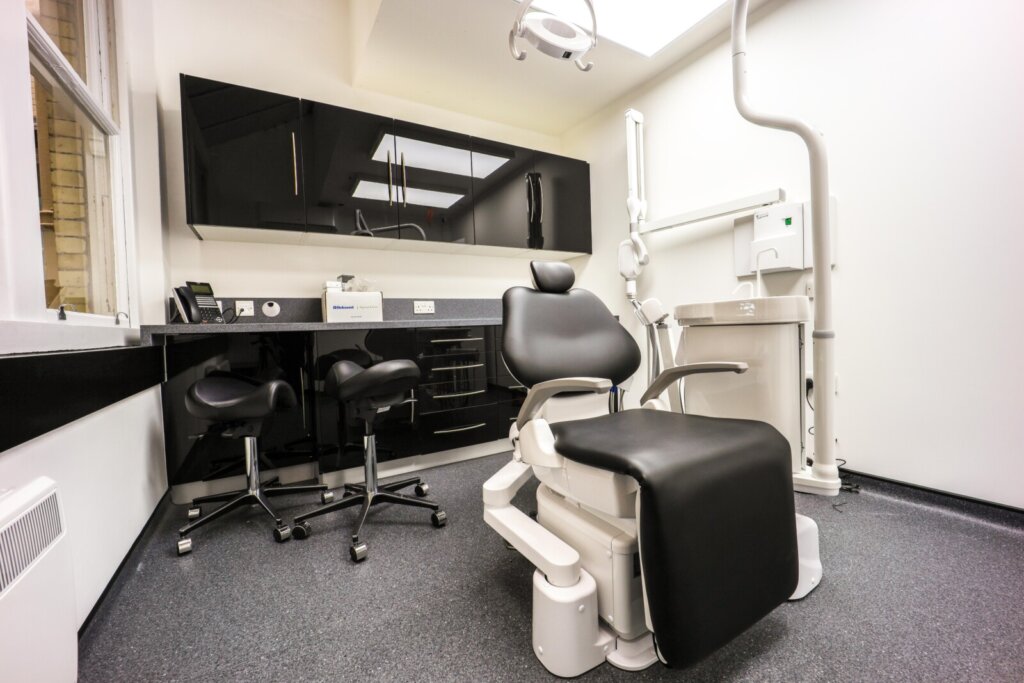
Healthcare environments demand far more than efficient construction. From patient safety and infection control to regulatory compliance and operational continuity, every design and delivery decision has direct clinical consequences.
Healthcare design & build brings together planning, design coordination, and construction under a single, accountable structure. This approach is increasingly used across clinics, laboratories, hospitals, dental practices, and specialist medical facilities where risk reduction, speed, and clarity are critical.
This page explains how healthcare design & build works, why it is widely adopted across the healthcare sector, and what decision-makers should consider when planning or upgrading medical environments.
What Does Healthcare Design & Build Actually Involve?
Healthcare design & build is a delivery model where responsibility for design development and construction sits with a single team. Instead of separate designers and contractors working in isolation, coordination happens from the earliest stages.
In practice, healthcare projects are often delivered as part of a wider commercial design & build approach, adapted to meet the clinical, technical, and regulatory requirements unique to medical environments.
This integrated structure supports:
- Early risk identification around services, structure, and compliance.
- Clear accountability for programme, quality, and cost.
- Faster decision-making during live or phased projects.
- Better coordination of specialist healthcare systems.
Why is a Joined-Up Approach So Important in Healthcare Environments?
Healthcare buildings operate under conditions that leave little room for error. Patient safety, staff workflows, and regulatory compliance must be protected at all times.
A joined-up delivery approach is particularly effective within the healthcare sector, where facilities often remain operational during construction and clinical risks must be carefully managed.
Key reasons healthcare providers choose design & build include:
- Reduced disruption to ongoing clinical services.
- Clear management of infection control measures.
- Improved coordination of clinical equipment and building services.
- Greater certainty around programme and budget.
How Does Healthcare Design & Build Support Different Medical Settings?
Healthcare facilities vary widely in scale and function, but many face similar design and delivery challenges.
1. Clinics and Medical Practices
Outpatient clinics and GP practices must balance patient comfort with efficient staff workflows. Design & build supports early planning of reception areas, consultation rooms, diagnostics, and back-of-house functions.
This is explored in more depth in our content focused on clinics design & build, where space efficiency and compliance must work together.
2. Laboratories and Testing Facilities
Laboratories require precise coordination of layouts, clean and dirty routes, ventilation strategies, and specialist services. Early integration of design and construction is critical in laboratory environments.
These considerations are examined further in relation to laboratory and testing facilities, where workflow and safety directly affect performance.
Read More: Laboratory Design & Build
3. Hospitals and Specialist Medical Facilities
Larger healthcare environments demand robust phasing strategies, resilient infrastructure, and future-proofed layouts to accommodate evolving clinical needs.
How Do Workflow, Zoning and Operational Flow Shape Healthcare Spaces?
Effective healthcare environments are designed around movement of patients, staff, equipment, and supplies.
Design & build allows workflow considerations to be resolved early, helping to:
- Separate public, clinical, and service routes.
- Reduce unnecessary travel distances for staff.
- Improve wayfinding and patient experience.
- Support infection prevention through zoning.
In environments such as laboratories and acute care areas, poor layout decisions can compromise safety and efficiency. Integrated planning helps prevent these risks.
How Does Healthcare Design Build Support Compliance in the UK?
Healthcare projects in the UK must align with a wide range of statutory regulations, technical standards, and clinical guidance.
Design & build teams work with these requirements from the outset, helping clients navigate healthcare regulations in the UK without late-stage redesigns or compliance gaps.
This typically includes consideration of:
- Building Regulations and fire safety standards.
- HTM and HBN guidance.
- Accessibility and equality requirements.
- Environmental and sustainability targets.
How are Live Healthcare Environments Managed During Construction?
Many healthcare projects take place within operational buildings. Maintaining safe, uninterrupted clinical services is often a non-negotiable requirement.
Healthcare design & build supports work within live clinical environments by enabling:
- Phased and sectional delivery strategies.
- Temporary segregation and controlled access.
- Clear infection control planning.
- Close coordination with clinical teams.
Early contractor involvement is particularly valuable where noise, dust, vibration, or access restrictions must be tightly managed.
How Does Design & Build Fit Within Wider Commercial Projects?
Healthcare projects rarely exist in isolation. They often form part of larger commercial estates, mixed-use developments, or campus-style facilities.
When assessing procurement routes, many clients compare integrated delivery with traditional approaches. This comparison is explored further when considering design & build vs. traditional procurement, particularly in regulated and time-sensitive environments like healthcare
Where Does Refurbishment Fit Within Healthcare?
A significant proportion of healthcare projects involve upgrading, reconfiguring, or extending existing facilities rather than constructing new buildings.
In refurbishment scenarios, design & build supports:
- Early surveys and risk assessments.
- Integration of new systems within existing structures.
- Careful phasing to maintain clinical operations.
- Improved cost and programme certainty.
This approach is often aligned with broader commercial refurbishment strategies adapted for healthcare-specific constraints.
Final Thoughts
Healthcare design & build is not simply a procurement choice; it is a response to the complexity, risk, and responsibility inherent in medical environments. By integrating design development and construction planning, healthcare providers can better manage compliance, workflow, and operational continuity.
For organisations planning new facilities or upgrading existing ones, understanding how healthcare design & build functions at a strategic level is essential to making informed decisions.
If you are assessing how an integrated delivery approach could support your healthcare project, reviewing how it aligns with your operational priorities is a valuable first step.
FAQs
Is healthcare design & build suitable for small clinics?
Yes. Smaller clinics and practices often benefit from early coordination and clear accountability, particularly where space constraints and compliance requirements overlap.
Can healthcare design & build support future expansion?
RDesign & build can incorporate future-proofing strategies such as modular layouts, adaptable services, and structural allowances for expansion.
How early should clinical equipment be considered?
Medical equipment planning should be integrated at early design stages to ensure spatial, structural, and service requirements are properly coordinated.
Does design & build reduce project risk in healthcare?
While no approach eliminates risk entirely, early contractor involvement and single-point responsibility can significantly reduce coordination and compliance risks.
Is sustainability compatible with healthcare design & build?
ead Yes. Energy efficiency, low-carbon materials, and operational sustainability can be embedded from the outset without compromising clinical performance.

