


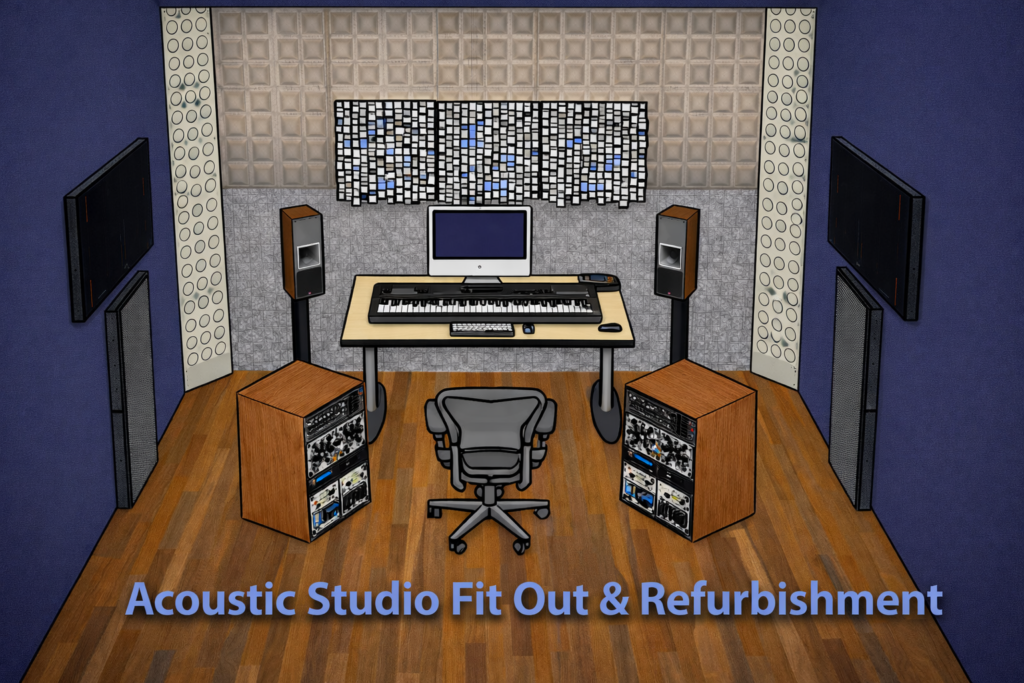
Designing or upgrading an acoustic studio requires more than installing sound panels. Whether you’re creating a recording studio, podcast suite, rehearsal room, or broadcast facility, a carefully planned acoustic studio fit out and refurbishment ensures optimal sound quality, durability, and compliance.
For commercial operators, studios must balance technical precision with workflow efficiency, safety regulations, and long-term adaptability.
Why Acoustic Studio Design Matters
Sound behaves differently in enclosed environments. Without proper planning, studios suffer from:
- Sound leakage
- Poor sound isolation
- Uncontrolled reverberation
- Low-frequency build-up
- External noise interference
A well-executed recording studio fit out addresses both soundproofing (blocking sound transmission) and acoustic treatment (controlling internal reflections).
Acoustic Studio Fit Out vs. Studio Refurbishment
| Aspect | Acoustic Studio Fit Out | Studio Refurbishment |
| Definition | Construction of a studio from a shell or conversion of an empty commercial unit into a purpose-built acoustic space | Upgrading or improving an existing studio to enhance performance, layout, or finishes |
| Typical Starting Point | Empty unit, shell & core, or full structural conversion | Existing operational studio or partially treated space |
| Main Objective | Build a fully functional studio from scratch | Improve acoustic performance and modernise the space |
| Structural Work | Structural soundproofing systems, isolated wall construction, floating floors | Usually limited structural changes unless upgrading isolation |
| Acoustic Works | Full soundproof studio construction including acoustic panel installation and HVAC acoustic control | Replacement or enhancement of acoustic treatment and sound isolation |
| MEP & Electrical | Complete electrical, cabling, and ventilation planning | Upgrades to lighting, power distribution, or equipment zones |
| Best Suited For | New recording studios, broadcast facilities, or full commercial studio launches | Music studio refurbishment, performance upgrades, or layout optimisation |
| Related Service | Aligns with a full Commercial Fit Out | Falls under specialist Commercial Refurbishment |
What are the Key Components of an Acoustic Studio Fit Out
1. Soundproofing & Isolation
Soundproofing prevents noise entering or escaping the studio. Key elements include:
- Double-layer plasterboard systems.
- Acoustic insulation.
- Resilient bars or isolation clips.
- Floating floors.
- Acoustic doors and seals.
Pro insight: Mass + decoupling are essential for effective isolation. Lightweight partitions alone are insufficient.
2. Internal Acoustic Treatment
Once isolation is addressed, treatment controls internal acoustics. Common solutions:
- Broadband absorbers.
- Bass traps.
- Diffusers.
- Ceiling clouds.
- Fabric-wrapped panels.
3. Layout & Zoning
Studios often include:
- Control room
- Live room
- Vocal booth
- Equipment storage
- Editing suites
Effective layout planning ensures:
- Clear sightlines
- Efficient workflow
- Reduced cable clutter
- Safe equipment access
4. HVAC & Ventilation
Studios require silent ventilation systems. Standard HVAC systems create unacceptable background noise. Solutions include:
- Acoustic duct liners.
- Silenced air paths.
- Vibration isolation mounts.
5. Lighting & Electrical Planning
Studios need:
- Dimmable lighting.
- Low-noise power circuits.
- Isolated electrical systems.
- Dedicated equipment zones.
Proper cable management prevents interference and clutter.
How to Plan an Acoustic Studio Project
- Step 1: Define the Purpose
- Step 2: Assess the Existing Space
- Step 3: Budget & Phasing
Planning an Acoustic Studio Fit Out or Refurbishment? Request a Consultation today!
What are the Common Challenges in Studio Refurbishment
- Working within existing structural limits
- Maintaining business operations during works
- Achieving compliance in multi-tenant buildings
- Balancing budget with acoustic performance
- Professional planning prevents costly rework.
Particularly in shared commercial buildings, compliance planning is critical.
Cost Factors in Acoustic Studio Fit Out and Refurbishment
Costs depend on:
- Level of sound isolation required.
- Structural modifications.
- Size of studio.
- Equipment integration.
- HVAC complexity.
- Finishing specifications.
Floating floors and structural isolation significantly impact budget.
Final Thoughts
An acoustic studio fit out and refurbishment requires specialist planning beyond standard commercial construction. From structural sound isolation to internal acoustic control, each detail affects sound performance.
Whether you are building from shell or upgrading an operational space, careful integration of acoustic engineering and commercial construction ensures long-term reliability and professional results.
FAQs
How thick do studio walls need to be for effective soundproofing?
Wall thickness depends on required isolation levels. High-performance studios often use double-wall systems with insulation and air gaps to prevent sound transmission.
Can an acoustic studio be installed in a shared office building?
Yes, but vibration isolation and structural assessment are critical. Additional measures may be required to prevent sound transfer to neighbouring tenants.
What is the difference between STC and NRC ratings?
- STC (Sound Transmission Class) measures how well a partition blocks sound.
- NRC (Noise Reduction Coefficient) measures how well a material absorbs sound inside a room.
Do acoustic panels alone make a room soundproof?
No. Panels improve internal sound quality but do not stop sound leaving or entering a room. Structural soundproofing is required for isolation.
How do you reduce low-frequency bass build-up?
Bass traps placed in room corners and correct speaker positioning help control low-frequency issues.
Is planning permission required for studio construction?
Usually not for internal works, but structural changes or listed buildings may require approval.

