


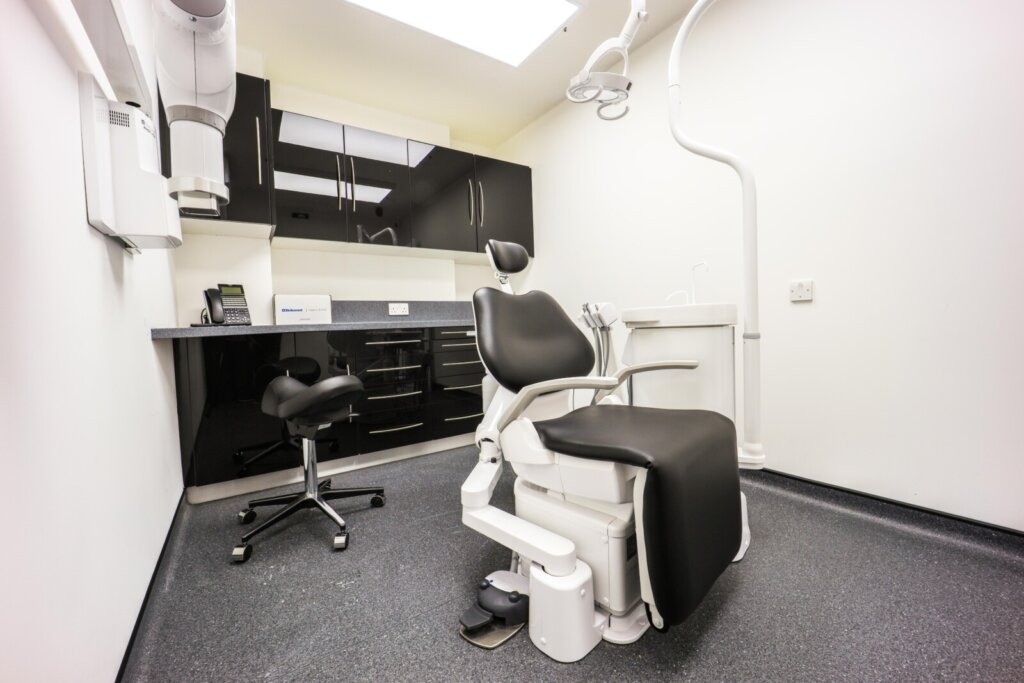
Designing and delivering healthcare facilities while they remain operational presents a distinct set of challenges. Patient safety, infection control, continuity of care, and regulatory compliance must all be maintained while construction and refurbishment works are carried out.
This article focuses on how healthcare facilities can be designed and built in live environments, where services continue throughout the project. It explores how design & build helps manage operational risk, minimise disruption, and maintain safe, compliant spaces across clinics, medical offices, hospitals, dental practices, and other healthcare settings.
What Is a Live Healthcare Environment?
A live healthcare environment refers to any setting where medical services remain active during construction, refurbishment, or expansion works. This can include:
- GP surgeries and medical clinics.
- Dental and specialist outpatient practices.
- Hospitals and day-care facilities.
- Diagnostic and treatment centres.
In these environments, construction activity must be carefully planned around patients, staff, and clinical operations. Unlike vacant commercial projects, there is little margin for error.
Why Live Healthcare Projects Carry Higher Risk
Healthcare projects in live settings introduce risks that do not typically exist in standard commercial fit-outs. These include:
- Patient exposure to noise, dust, or vibration.
- Disruption to clinical workflows and appointment schedules.
- Infection control and contamination risks.
- Restricted access and emergency route management.
- Increased scrutiny from regulators and inspectors.
Managing these risks requires a structured approach that considers both design intent and real-world operation.
How Can Design & Build Reduce Risk in Live Healthcare Projects?
Design & build is particularly effective in live healthcare environments because it integrates planning, design, and construction under a single coordinated process.
Key risk-reduction benefits include:
- Early identification of operational constraints.
- Coordinated phasing strategies aligned with clinical activity.
- Faster decision-making when conditions change.
- Reduced handover gaps between design and delivery.
Rather than reacting to problems on site, risks are anticipated and resolved during early planning stages.
Planning Works Around Active Clinical Operations
Phasing and sequencing strategies
Phased delivery is essential in live healthcare settings. Works are often divided into clearly defined stages to ensure clinical services remain uninterrupted. This may involve:
- Out-of-hours or weekend construction.
- Temporary relocation of departments.
- Sectional handovers rather than full completion.
- Decanting strategies within the same building.
Careful sequencing helps maintain safe access routes for patients and staff while allowing progress on site.
Maintaining patient and staff safety
Safety planning in live environments goes beyond standard site controls. Considerations typically include:
- Segregation of construction and clinical zones.
- Clear wayfinding and temporary signage.
- Noise and vibration monitoring.
- Enhanced dust control and air filtration measures.
These measures protect vulnerable patients and ensure staff can continue working effectively.
Infection Control in Live Healthcare Design & Build
Infection prevention is a central concern when working in operational healthcare facilities. Design & build teams must account for:
- Controlled movement of materials and waste.
- Clean and dirty route separation.
- Temporary barriers and sealed work zones.
- Enhanced ventilation and filtration during works.
These requirements are closely aligned with wider healthcare compliance standards, which are explored in more detail within the broader Healthcare Design & Build guidance.
Coordinating Compliance Without Disrupting Care
Live healthcare projects must meet the same regulatory standards as new-build facilities, often under more challenging conditions. Typical compliance areas include:
- Fire safety and compartmentation.
- Accessibility and inclusive design.
- Mechanical and electrical system integrity.
- Clinical ventilation performance.
By addressing compliance early and coordinating with building control and healthcare stakeholders, design & build helps avoid delays or rework that could disrupt patient services.
View Details: Design and Build Service
When Refurbishment Is the Only Practical Option
Many healthcare providers operate from buildings that cannot be vacated or replaced. In these cases, live refurbishment becomes the only viable solution.
Refurbishment in live environments is commonly required when:
- Clinical layouts no longer support patient flow.
- Equipment upgrades demand spatial changes.
- Compliance standards evolve over time..
- Services expand incrementally.
These projects often form part of a wider commercial refurbishment strategy, where continuity of service is as important as physical improvement.
View Details: Commercial Refurbishment
Final Thoughts
Designing healthcare facilities in live environments demands precision, planning, and close coordination. Success depends on understanding how buildings are actually used and delivering change without compromising patient care, safety, or compliance.
When managed correctly, design & build provides a structured, risk-aware approach that allows healthcare providers to improve their facilities while remaining fully operational.
If you are planning works in an active healthcare setting, early coordination is critical. Understanding constraints at the outset can significantly reduce disruption later in the project lifecycle.
FAQs
Can healthcare refurbishment be carried out without closing the facility?
Yes. Many healthcare refurbishments are delivered in phases, allowing services to remain operational throughout the project.
How is noise managed in live healthcare environments?
Noise is controlled through phased scheduling, acoustic barriers, and careful selection of construction methods to limit disruption.
Are infection control measures different during live works?
Yes. Temporary controls such as sealed work zones, enhanced cleaning, and airflow management are often required during construction.
Who is responsible for maintaining compliance during live projects?
Compliance is typically managed collaboratively between the design & build team, building control, and healthcare stakeholders.
Can design & build adapt if clinical needs change mid-project?
Yes. One of the advantages of design & build is the ability to respond quickly to operational changes without disrupting the overall programme.

