


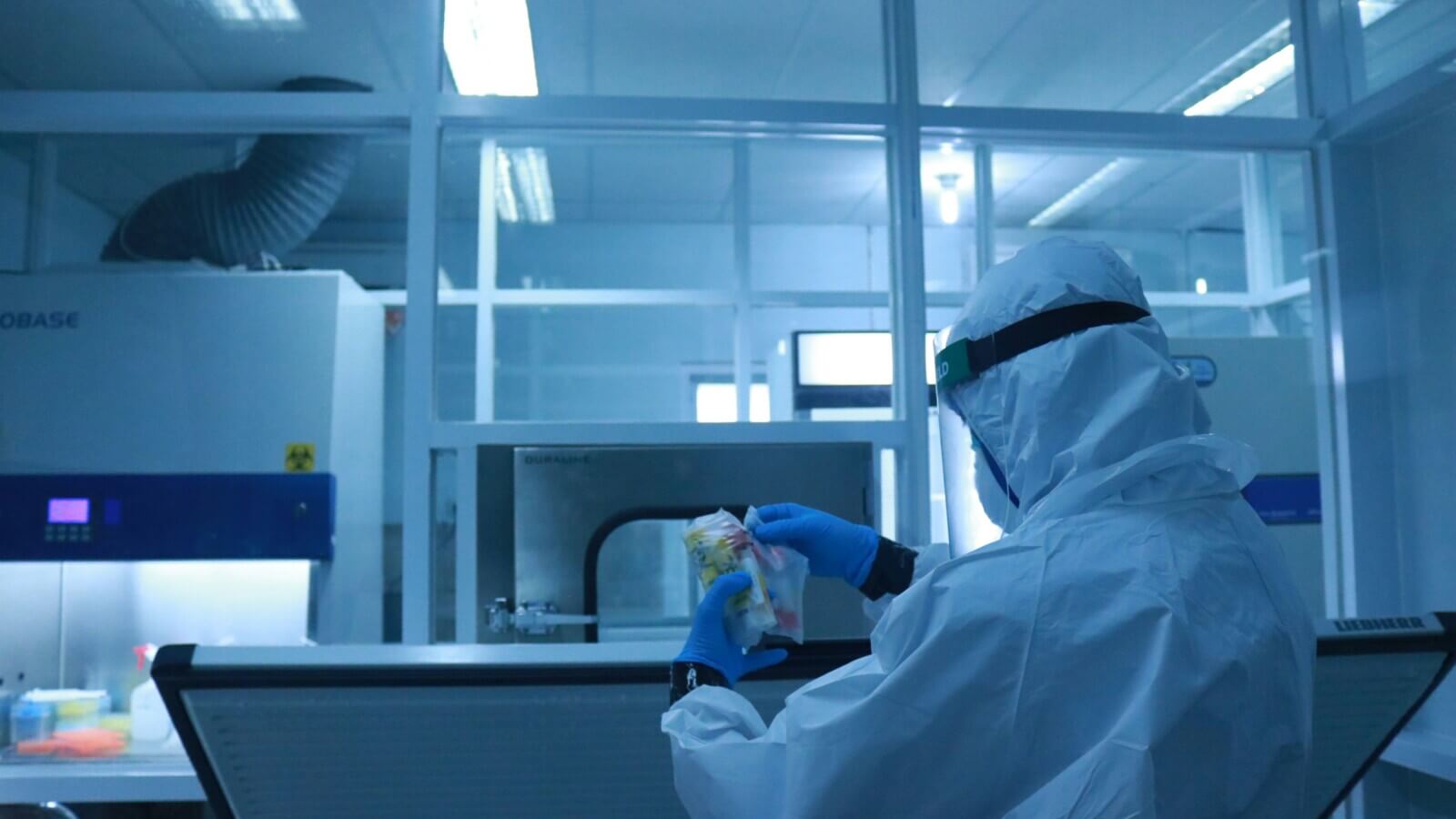
Laboratory refurbishment is rarely a cosmetic exercise. In most cases, it involves upgrading compliance standards, improving workflow efficiency, and strengthening safety controls, often within operational environments where downtime carries risk.
Whether you manage a diagnostic laboratory, research facility, pathology lab or healthcare-based testing unit, refurbishment decisions must balance regulation, containment, and operational continuity.
Why is Laboratory Refurbishment More Complex Than Standard Commercial Upgrades?
Laboratories operate under tighter environmental, safety and regulatory frameworks than most commercial spaces.
Unlike offices or general healthcare areas, labs may involve:
- Controlled air pressure regimes.
- Specialist ventilation systems (LEV, fume extraction).
- Chemical storage zones.
- Biohazard handling.
- Wash-down surfaces and impervious finishes.
- Segregated clean and dirty workflows.
Even minor layout changes can impact:
- Air change rates.
- Fire compartmentation.
- Containment levels.
- Safe escape routes.
This is why laboratory refurbishment requires coordinated input between design, compliance, mechanical services and operational teams.
What Compliance Requirements Apply to Laboratory Refurbishment?
Compliance requirements vary depending on the laboratory type, but commonly include:
1. Regulatory & Safety Considerations
- COSHH compliance.
- Fire safety regulations.
- Building Regulations approval.
- DDA / accessibility requirements.
- Electrical testing and certification.
- Ventilation performance standards.
For healthcare-associated laboratories, additional alignment with HTM guidance and CQC expectations may apply.
2. Environmental Controls
- Air changes per hour (ACH).
- Pressure differentials.
- Temperature stability.
- Humidity control.
- Extraction and filtration performance.
Before refurbishment begins, it is essential to confirm whether proposed works will affect containment classification or operational risk assessments.
Tip: Conduct a pre-refurbishment compliance audit to avoid late-stage redesign caused by ventilation or fire strategy conflicts.
How Does Workflow Design Impact Laboratory Performance?
Workflow inefficiency is one of the most common drivers behind laboratory refurbishment. Over time, labs evolve. Equipment increases. Storage expands. Processes change. But layouts often remain static.
A well-planned laboratory refurbishment can improve:
- Sample intake and registration flow.
- Clear segregation between clean and contaminated areas.
- Bench-to-storage proximity.
- Staff circulation routes.
- Equipment zoning.
- Waste management routes.
Key Workflow Questions to Ask
- Are staff crossing paths with waste disposal routes?
- Is sample movement linear or backtracking?
- Are high-use benches positioned logically?
- Does the layout support future equipment upgrades?
Small spatial corrections can reduce handling time, improve safety margins and increase throughput without expanding floor area.
What Safety Risks Must Be Reviewed During Laboratory Refurbishment?
Safety is not limited to finishes and signage. It is embedded within services and layout decisions.
Common risk areas:
- Inadequate fume extraction after layout reconfiguration.
- Poor separation of chemical storage.
- Overloaded electrical systems.
- Insufficient emergency eyewash or shower access.
- Slip risks due to incompatible flooring.
Refurbishment provides an opportunity to:
- Upgrade lab-grade flooring.
- Improve bench ergonomics.
- Introduce clearer zoning.
- Enhance acoustic control where required.
- Modernise emergency systems.
Importantly, safety upgrades must be integrated into programme sequencing if the laboratory remains operational during works.
Can a Laboratory Remain Operational During Refurbishment?
In some cases, yes, but only with structured phasing. Live laboratory refurbishment requires:
- Isolated work zones.
- Temporary service diversions.
- Coordinated ventilation shutdown planning.
- Contamination control barriers.
- Adjusted operating schedules.
Where continuous testing is critical, phased room-by-room upgrades may be preferable to full closure. If refurbishment forms part of wider clinical estate upgrades, aligning planning with a broader healthcare environment strategy ensures risk is managed holistically.
How Do Mechanical & Electrical Systems Influence Refurbishment Scope?
In laboratory environments, MEP systems are often the most complex and costly elements. Refurbishment may involve:
- Upgrading HVAC systems.
- Rebalancing air pressure regimes.
- Modifying ductwork for new equipment.
- Increasing electrical load capacity.
- Adding UPS systems.
- Enhancing data infrastructure.
Even relocating a single fume cupboard can require recalculating airflow performance. Early MEP feasibility reviews reduce disruption and cost escalation.
When Should You Consider a Full Laboratory Fit Out Instead?
Refurbishment typically improves an existing space. However, if:
- The layout no longer supports safe workflow.
- Services are fundamentally outdated.
- Compliance gaps are extensive.
- Future expansion is constrained.
A more comprehensive laboratory fit out strategy may be required. This decision should be based on operational audits rather than surface condition alone.
How Does Laboratory Refurbishment Connect to Wider Healthcare Estate Strategy?
Laboratories rarely operate in isolation. They often support:
- GP practices.
- Outpatient facilities.
- Diagnostic centres.
- Private healthcare providers.
If your lab sits within a broader healthcare estate, refurbishment decisions should align with long-term clinical capacity planning and regulatory compliance strategies.
Where estates teams are reviewing multiple environments simultaneously, a coordinated healthcare sector refurbishment approach can ensure consistency across clinical and specialist spaces.
Final Thoughts
Laboratory refurbishment is not simply about upgrading finishes or replacing benches. It requires careful evaluation of:
- Regulatory obligations.
- Workflow efficiency.
- Safety controls.
- Mechanical performance.
- Operational continuity.
When these factors are considered early, refurbishment can extend the life of laboratory environments while strengthening compliance and improving day-to-day efficiency. The difference lies in the planning depth, not the surface upgrades.
FAQs
How often should laboratories be refurbished?
There is no fixed cycle, but many facilities review laboratory refurbishment needs every 7-10 years, particularly when compliance standards or equipment requirements change.
Does laboratory refurbishment require planning permission?
Internal refurbishment typically does not, unless structural changes, external alterations or change of use are involved. Building Regulations approval may still be required.
What is the biggest cost driver in laboratory refurbishment?
Mechanical and electrical upgrades, particularly ventilation and extraction systems, often represent the largest portion of project costs.
How do you validate ventilation after refurbishment?
Airflow testing, commissioning reports and certification are typically required to confirm compliance with performance standards.
Can lab benches be reused during refurbishment?
Sometimes, but reuse depends on condition, chemical exposure history and compatibility with revised layout and service routing.
What documentation should be updated after refurbishment?
Risk assessments, fire strategy drawings, COSHH registers, ventilation performance certificates and electrical test records should all be reviewed and updated.

