


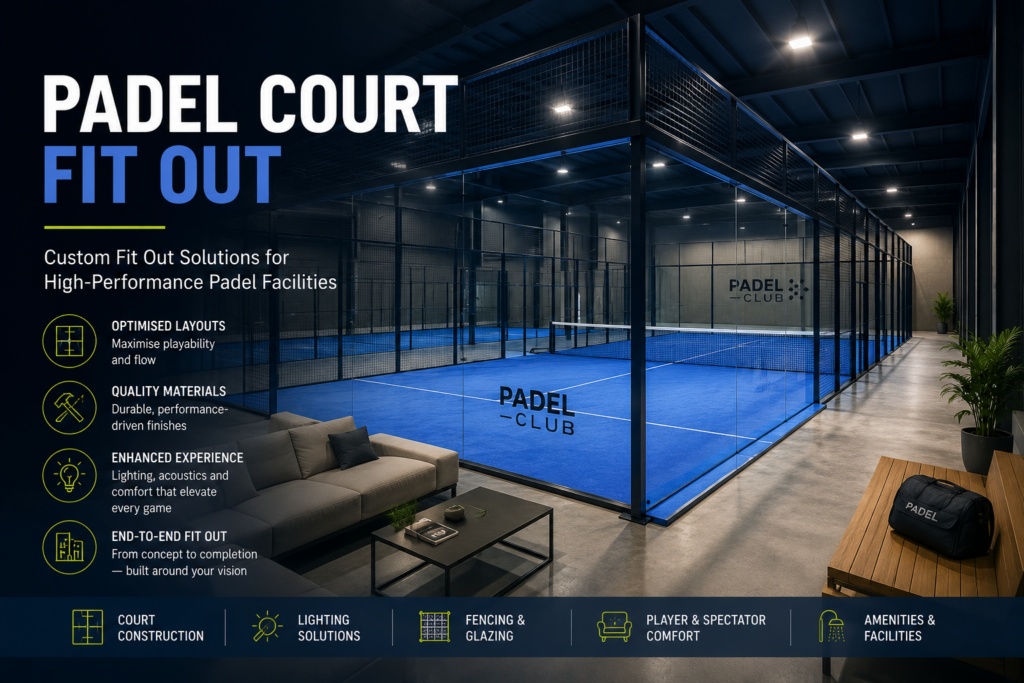
The rapid growth of padel has created significant demand for purpose-built facilities across the UK. From dedicated padel clubs and leisure centres to hotels, universities, and multi-sport venues, operators are increasingly investing in new courts to meet growing participation levels.
However, a successful padel court project involves far more than installing a playing surface and perimeter structure. Site selection, space planning, lighting, spectator areas, circulation routes, changing facilities, and operational requirements all influence the long-term success of a venue.
A well-planned padel court fit out considers the entire user experience, from player arrival through to gameplay, social interaction, and future expansion opportunities. Whether developing a single court or a multi-court facility, understanding the key stages of the fit out process helps create a venue that is practical, commercially viable, and built for long-term use.
Why is Demand for Padel Facilities Growing So Quickly?
Padel has become one of the fastest-growing sports worldwide, attracting players of all ages and skill levels. Several factors continue to drive investment in new facilities:
- Growing player participation.
- Increasing demand for indoor and outdoor courts.
- Strong commercial potential for operators.
- Relatively small footprint compared to other racket sports.
- Social and community appeal.
- Opportunities for memberships, coaching, tournaments, and events.
Many operators are also integrating padel courts into broader leisure destinations. As a result, padel developments are increasingly being planned alongside gyms, wellness facilities, hospitality spaces, and other recreational environments. This approach closely aligns with modern Leisure Fit Out strategies, where the focus is on creating engaging, multi-purpose facilities that maximise visitor experience and utilisation.
What Does a Padel Court Fit Out Typically Include?
A padel court fit out encompasses all elements required to create a fully operational facility. Typical components include:
- Court Installation
- Court structures
- Tempered glass systems
- Steel framework
- Artificial turf surfaces
- Net systems
- Perimeter fencing
- Building and Infrastructure Works
- Foundations
- Drainage systems
- Electrical services
- Lighting infrastructure
- Mechanical systems where applicable
- Supporting Facilities
- Reception areas
- Waiting spaces
- Changing rooms
- Showers
- Accessible facilities
- Storage areas
- Social and Commercial Spaces
- Cafés
- Viewing areas
- Pro shops
- Event spaces
- Member lounges
For larger developments, the project often forms part of a wider commercial fit out programme, ensuring courts, reception areas, changing facilities, cafés, retail spaces, and spectator zones are designed as a cohesive environment rather than standalone elements.
What Should Be Considered During the Planning Stage?
A successful fit out begins long before construction starts.
Site Assessment
Key factors include:
- Ground conditions
- Existing structures
- Access routes
- Utility connections
- Planning restrictions
- Environmental considerations
User Experience Planning
Operators should consider:
- Arrival experience
- Booking and reception flow
- Changing facilities
- Spectator comfort
- Accessibility requirements
Future Expansion
Demand for padel continues to grow, making future-proofing an important consideration. Planning for the below can reduce disruption and costs later.
- Additional courts
- Expanded social areas
- Increased parking capacity
- Additional coaching facilities
How Do Indoor and Outdoor Padel Court Fit Outs Differ?
The approach varies significantly depending on whether the facility is indoor or outdoor.
| Consideration | Indoor Facility | Outdoor Facility |
| Weather Protection | Full | Limited |
| Lighting Requirements | Controlled environment | Enhanced external lighting |
| Ventilation | Required | Natural |
| Surface Exposure | Lower | Higher |
| Construction Costs | Typically higher | Typically lower |
| Year-Round Use | Excellent | Weather dependent |
Both options offer advantages depending on location, budget, and operational goals.
What Role Does Sustainability Play in Modern Padel Facilities?
Sustainability is becoming increasingly important across sports and leisure developments. Common strategies include:
- Energy-efficient LED lighting
- Water-efficient facilities
- Durable construction materials
- Smart building controls
- Low-maintenance surfaces
- Sustainable drainage solutions
These measures can reduce operating costs while supporting environmental objectives.
How Can Operators Future-Proof a Padel Venue?
The strongest facilities are designed with growth in mind. Future-proofing measures include:
- Additional service capacity
- Flexible layouts
- Modular expansion opportunities
- Technology integration
- Adaptable social spaces
Future-proofing does not stop once the facility opens. As courts age and player expectations evolve, periodic upgrades may be required to maintain performance and appearance. Many operators invest in Padel Court Refurbishment projects to replace worn playing surfaces, upgrade lighting systems, improve spectator areas, and extend the lifespan of existing facilities without undertaking a complete redevelopment.
Can Existing Buildings Be Converted into Padel Facilities?
Many successful padel venues begin life as existing commercial buildings rather than new-build developments.
Former warehouses, industrial units, leisure facilities, and retail spaces often provide the ceiling heights and open floor areas required for court installation. In these situations, a Commercial Refurbishment can provide a cost-effective route to creating a modern sports facility while making use of existing structures and infrastructure.
For operators seeking to enter the market quickly, refurbishment can often reduce development times compared to new-build alternatives.
Final Thoughts
A successful padel court fit out involves much more than court installation. Space planning, infrastructure, player experience, operational efficiency, and future scalability all contribute to the long-term success of a facility.
As demand for padel continues to grow, operators who invest in well-planned environments are better positioned to maximise utilisation, improve customer satisfaction, and create facilities that remain relevant for years to come.
FAQs
Can an existing warehouse be converted into a padel facility?
Yes. Warehouses are often suitable due to their clear spans, ceiling heights, and flexibility. However, structural assessments and service upgrades may be required.
How many courts should a new padel club include?
This depends on demand and available space, but many commercial operators consider four or more courts to create stronger utilisation and revenue opportunities.
Do padel courts require specialist flooring beneath the turf?
Yes. The base construction plays an important role in drainage, performance, and long-term durability.
Can padel facilities operate successfully without social spaces?
They can, but facilities that include hospitality and social areas often benefit from longer visitor dwell times and increased secondary revenue opportunities.
Is planning permission required for padel court developments?
Requirements vary depending on the site, location, lighting proposals, and scale of development. Professional planning advice should be sought during the early stages.
What is the typical lifespan of a newly installed padel court?
With proper maintenance, key components such as turf, lighting, glazing, and structural elements can provide many years of service before major upgrades are required.

